
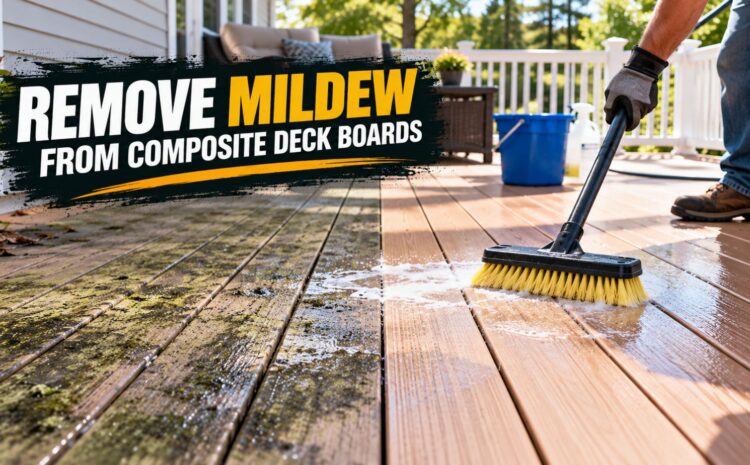
How to Remove Mildew Stains From Composite Deck Boards (Safely)
You bought composite decking so you could stop spending every spring with a stain brush. Then one morning you notice gray-green freckles in the shady corner by the steps, or a dark film creeping along the grooves, and the “low maintenance” promise starts to feel a little thin. If you’re trying to work out how to remove mildew stains from composite deck boards without scratching them, fading them, or voiding a warranty, the good news is that it’s usually an easy job. The better news is that a few small habits keep it from coming back.
Here’s the short version. Sweep the deck, wet it down, scrub the stained areas with a soft-bristle brush and either mild soapy water or an oxygen-bleach cleaner used exactly as the label directs, rinse thoroughly, and let it dry. Skip wire brushes, aggressive pressure washing, and anything your decking manufacturer hasn’t approved. The rest of this guide explains each step, why it matters, and what to do when a stain refuses to budge.
What Mildew on a Composite Deck Actually Is
Mold and mildew need three things to take hold: moisture, something to feed on, and mild temperatures. Composite boards are made from a blend of plastic and wood fibers, and in some products those fibers can give growth a foothold. More often, though, the real food source is what’s sitting on top of the boards: pollen, leaf bits, dirt, bird droppings, spilled drinks, and the fine grit that settles into the grooves.
That’s why mildew shows up where the deck stays damp longest. Shaded corners. Spots under planters. Boards near a downspout or a sprinkler. Low decks with little airflow underneath. The boards themselves may be perfectly fine, but a thin layer of organic grime plus lingering moisture is all mildew needs.
It also explains why capped composite boards, the ones with a protective shell around the core, tend to resist staining better than older uncapped products. They aren’t immune. They just give growth less to hold onto.
First, Make Sure It’s Actually Mildew
Not every dark mark on a deck is mildew, and treating the wrong problem wastes time or makes things worse. Before you buy anything, run a quick check. Scrub a small spot with warm soapy water and a soft brush. If the mark lifts, you’re dealing with surface dirt or mildew and the plan below will work. If it doesn’t budge, look at the table.
| What You See | Likely Cause | Where to Start |
|---|---|---|
| Black, gray, or green speckles, often in shade or grooves | Mildew or mold | Soap and water first, then an oxygen-bleach cleaner if needed |
| Slimy green film on damp boards | Algae | Same approach as mildew, plus fixing the moisture source |
| Brownish or yellowish blotches on newer boards | Tannin bleed from wood fibers | Often fades with weathering and routine washing, so check the manufacturer’s guidance |
| Orange or rust-colored marks near furniture legs or fasteners | Rust | Needs a rust-specific treatment the manufacturer approves, not mildew cleaner |
| Dark, greasy-looking spots near the grill | Grease or food oils | Dish soap and warm water, applied promptly |
If you can’t tell what you’re looking at, a photo and a quick question to your decking manufacturer’s support line will save you from guessing.
What You’ll Need
You don’t need a shelf full of products. A garden hose, a push broom, a soft-bristle deck brush, a bucket, and some mild dish soap or composite-safe deck cleaner cover most jobs. For stubborn mildew, an oxygen-bleach cleaner (usually based on sodium percarbonate) is the common next step, since it’s gentler on plants and surfaces than chlorine bleach. Add rubber gloves and eye protection, plus a pair of old clothes.
If you plan to use a pressure washer, you’ll also want a wide fan tip and the patience to keep it low and steady. More on that below.
Safety First
Most deck cleaners are safe when used as directed, but a few rules matter more than people realize.
Never mix cleaning products. Chlorine bleach combined with ammonia, vinegar, or acid-based cleaners can release toxic gases. If you used one product, rinse the area completely before trying another.
Wear gloves and eye protection, work outdoors in good airflow, and keep kids and pets off the deck until you’ve rinsed and it’s dry. Wet the plants around the deck before you start and rinse them afterward, because many cleaners harm foliage. And always read the label of whatever you’re using, including the dilution instructions, instead of relying on a recipe from a forum post.
Finally, test any new cleaner on a small, hidden patch first, such as under a bench or near a board end. Wait until it dries so you can see the real result.
How to Remove Mildew Stains From Composite Deck Boards, Step by Step
1. Clear the deck and sweep. Move furniture, planters, and mats. Sweep off leaves and debris, and run the broom corner of a brush or a putty knife with a rounded edge along the gaps to clear packed-in grit. Mildew feeds on that gunk, so removing it is half the battle.
2. Wet the boards and the surrounding plants. A gentle rinse with the hose loosens surface dirt and keeps cleaner from soaking in too fast.
3. Start with the mildest option. Mix mild dish soap with warm water, or use a deck cleaner made for composites, following the label. Apply it to the stained area and give it a few minutes to work, but never let it dry on the boards.
4. Scrub with a soft-bristle brush. Work along the length of the boards, in the direction of the grain pattern, rather than in circles. This protects the surface texture and keeps scrub marks from showing. Put your effort into the grooves and edges, where mildew hides.
5. Step up if needed. If soap and water leave stains behind, switch to an oxygen-bleach cleaner mixed according to its label. Apply, wait the recommended time, scrub again, and keep the surface wet while it dwells. Don’t mix it with other products.
6. Rinse thoroughly. Leftover cleaner can attract dirt and leave streaks. Rinse until the water runs clear, working from the top of the deck toward the edge so runoff doesn’t redeposit grime on clean boards.
7. Let it dry, then inspect. Mildew stains often look better wet than dry, so judge your results once the boards are fully dry. If a spot remains, repeat the process before escalating to anything stronger.
Choosing a Cleaner: What Works and What to Avoid
Mild soap and warm water is always the right first move. It’s cheap, safe for plants and surrounding surfaces, and enough for lightly affected boards.
Oxygen-bleach cleaners are the usual next step for true mildew. Many decking manufacturers recommend or sell products in this category, which is a good reason to check your brand’s care guide first.
Chlorine bleach is where opinions split. Some manufacturers allow diluted use for stubborn mildew, while others warn that it can fade colors, damage railings and metal fasteners, and harm surrounding landscaping. If your manufacturer doesn’t explicitly approve it, there’s no reason to take the risk when gentler options work well for most stains.
Commercial composite cleaners are formulated for these surfaces and tend to be the least stressful choice if you’d rather not experiment.
Here’s what to leave in the garage:
- Wire brushes and steel wool. They scratch the surface, and tiny steel particles left behind can rust and leave new stains.
- Sanding. On capped boards, sanding can wear through the cap that protects the core.
- Harsh solvents and acids your manufacturer hasn’t approved. They can dull, discolor, or damage the board.
- High-pressure washing without checking the guidelines. More on that next.
A Word About Pressure Washers
Plenty of homeowners reach for a pressure washer first, and sometimes that’s fine. Plenty of manufacturers allow it with limits, while a few discourage it. Too much pressure can roughen the surface, lift fibers, damage the cap layer, wear away embossed grain, and force water into places you’d rather keep dry.
If your manufacturer allows it, use a wide fan tip, keep the nozzle at a good distance, and move steadily along the length of the boards instead of lingering on one spot. If you can’t find guidance for your product, a hose and brush will do the job without the risk.
Dealing With Stubborn or Recurring Stains
If you’ve cleaned a spot twice and it’s still there, resist the urge to scrub harder. Give the cleaner a little more dwell time, keep the area wet while it works, and try again. Grooves and textured areas often need a second pass with a smaller brush, such as an old toothbrush, to reach the grime packed in the pattern.
If mildew keeps returning to the same place, the stain isn’t really the problem. The conditions are. Check for shade that never dries out, a leaky gutter or downspout dumping onto the boards, flower pots sitting directly on the surface, or a deck so close to the ground that air can’t circulate underneath. We’ve written about how trapped moisture quietly causes bigger trouble over time in Rot Beneath the Boards: What Failing Decks Reveal About Our Built Spaces, and the same principle applies here: fix the moisture and the stains mostly take care of themselves.
How to Keep Mildew From Coming Back
Prevention is mostly routine, and it’s far easier than scrubbing.
Sweep or blow off leaves, pollen, and debris regularly, especially in fall and during heavy pollen seasons. A quick weekly sweep takes five minutes and removes the food mildew relies on.
Wash the deck with mild soap and water at least twice a year, which is the interval many manufacturers suggest, and more often if your deck sits under trees or in constant shade. Clean up spills, grease, and food promptly instead of letting them sit.
Improve airflow and sunlight where you can. Trim back overhanging branches and shrubs. Keep the space under the deck open and clear of stored items, and make sure water drains away from the structure. Set planters on small risers or trays so air can move underneath, and avoid leaving damp rugs or mats on the boards for days.
None of this is complicated, but it’s what separates decks that look fresh for a decade from the ones that need a rescue mission every spring.
What About Sealers and Coatings?
It’s tempting to think a sealer or coating might solve the mildew problem for good. For composite decking, be careful. Many manufacturers specifically say their boards don’t need sealing, and some warn that unapproved products can trap moisture, peel, or void the warranty. Before putting anything on your boards, ask the manufacturer whether a coating or restoration product is approved for your specific decking.
Coatings do play a real role elsewhere, particularly on worn wood and concrete decks, where protecting the surface from moisture and UV matters a great deal. If you’re exploring that side of deck care, our deck coating articles cover how coatings work and what to consider before choosing one.
When to Check Your Warranty or Call a Professional
If large areas of the deck are stained, if the stains came back within weeks of cleaning, or if the boards feel soft, swollen, or spongy, stop scrubbing and look deeper. Those can be signs of a drainage problem or structural moisture issue that cleaning won’t fix. It’s also smart to read your warranty before using unusual products, since cleaning instructions are often part of the coverage terms. A reputable deck contractor or your manufacturer’s support team can help diagnose whether you’re dealing with surface mildew or something underneath.
Frequently Asked Questions
What’s the best way to remove mildew from a composite deck?
Start with a soft brush and mild soapy water. If stains remain, use an oxygen-bleach or composite-safe deck cleaner exactly as the label directs, scrub along the boards, rinse thoroughly, and let the deck dry before judging the result.
Can I use bleach on composite decking?
It depends on the manufacturer. Some allow diluted chlorine bleach for stubborn mildew, while others advise against it because it can fade boards and damage fasteners, railings, and plants. Check your brand’s care guide first, and never mix bleach with ammonia, vinegar, or acid-based cleaners.
Is it safe to pressure wash a composite deck?
Often yes, but only within limits. Use low pressure, a wide fan tip, and keep the nozzle moving at a distance. Some manufacturers restrict or discourage pressure washing, so confirm your product’s guidelines.
Why does mildew keep growing on my composite deck?
Usually because the boards stay damp or dirty. Shade, poor airflow, debris in the gaps, and nearby water sources all encourage regrowth. Cleaning removes the stain, but fixing moisture and debris keeps it away.
How often should I clean a composite deck?
Many manufacturers recommend washing at least twice a year, with extra cleaning after heavy pollen or leaf seasons and for decks in shaded, damp locations.
Will mildew damage composite decking?
Surface mildew is mostly a cosmetic problem and cleans off, though ignoring it lets grime build up and can make boards slippery. Persistent dampness is the bigger concern, since it can point to drainage or ventilation issues.
Conclusion
Learning how to remove mildew stains from composite deck boards comes down to a gentle, patient approach: clear the debris, start with soap and water, move to an oxygen-bleach cleaner only if you need it, scrub with a soft brush, and rinse well. Avoid the shortcuts that damage boards, like wire brushes, heavy sanding, and unapproved chemicals. Then deal with the cause. Keep the surface swept, give the deck airflow and sunlight where you can, and clean it a couple of times a year. Do that, and the mildew stops being a recurring chore and becomes an occasional touch-up.