
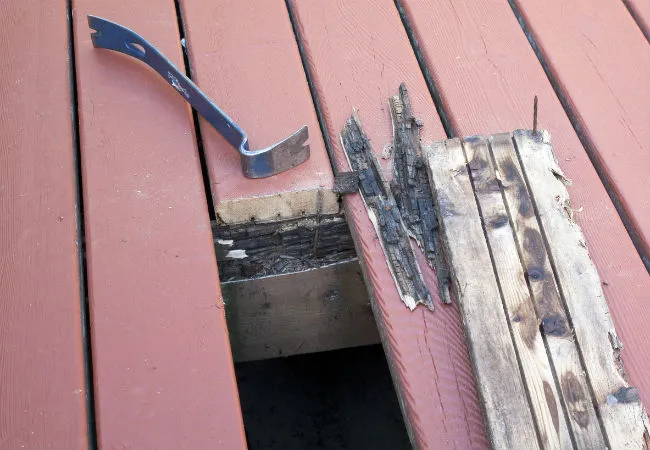
Rot Beneath the Boards: What Failing Decks Reveal About Our Built Spaces
Surface Simplicity Masks Structural Complexity
Deck structures may appear simple in design—planks aligned in rows, secured by fasteners—but beneath that simplicity lies a complex system exposed to persistent environmental stress. Over time, repeated cycles of moisture, temperature changes, and mechanical wear cause gradual degradation. What once felt structurally sound can begin to shift, warp, or even fail without obvious early warning.
Lessons from Collapse
An article published on Listverse.com examined numerous examples of decks that failed due to neglect, poor construction, or long-term exposure. In several documented cases, catastrophic failure followed overlooked warning signs. These events serve not only as cautionary tales but also as indicators of broader issues in how we maintain outdoor infrastructure.
Exposure Across Seasons
Decks remain vulnerable throughout the year. Intense sunlight during summer causes expansion and surface cracking. Autumn brings moisture that seeps into joints. Winter freezes that moisture, causing internal expansion. Spring thaws accelerate structural shifts. Each seasonal cycle deepens existing vulnerabilities, eventually leading to compromised integrity.
Moisture as the Root Cause
Moisture intrusion represents the primary source of deck failure. When water enters hairline fractures or unsealed fastener points, it initiates decay at the molecular level. Fungal growth begins, fibers weaken, and corrosion develops around metal connectors. Once this process begins, it advances quietly until the load-bearing capacity of the structure diminishes.
Early Warnings and Deferred Action
Most failures occur not as sudden accidents but as the end result of long-term degradation. A loose railing, a spongy board, or an uneven step often precedes a complete collapse. In nearly every instance explored on Listverse, the cause could be traced back to prolonged water exposure and delayed maintenance.
Polyurea as a Preventative Measure
Effective prevention begins with proper surface protection, and in recent years, polyurea has emerged as a superior solution for this application.
Polyurea is a spray-applied, fast-curing elastomer that forms a continuous, high-performance barrier. When applied to deck surfaces, it bonds tightly to the substrate and seals out moisture, ultraviolet radiation, and chemical contaminants. Unlike conventional paints or sealants, polyurea does not flake, peel, or become brittle with time.
Sealing Out the Cause
By sealing the entire deck surface, polyurea eliminates the micro-pathways through which water typically enters. Screw penetrations, exposed end grains, and hairline splits remain protected under a seamless membrane. The risk of rot, warping, and fastener failure drops significantly. Insects such as termites and carpenter ants, which require moisture to access and damage wood, are also deterred.
Addressing Previous Oversights
In many documented cases of deck failure, no protective sealant had been applied—or the coating used had deteriorated beyond effectiveness. Without a functioning barrier, water infiltrated the structure, and decay advanced undetected. With a professionally applied polyurea coating, such outcomes become far less likely.
Restoration Through Coating
Polyurea also provides an efficient means of restoring aging decks. When the frame and substructure remain intact, a coating can be applied to revitalize surface components. After thorough cleaning and preparation, technicians spray polyurea directly onto the deck, filling voids and encapsulating exposed fibers. The result is a unified, resilient surface with extended service life.
Defending Against Climate Challenges
In colder climates, the freeze-thaw cycle poses significant challenges to deck longevity. Water that infiltrates surface cracks freezes, expands, and forces the substrate apart. Repetition of this cycle can lead to wide separation and eventual structural failure. Polyurea prevents this by creating a barrier that eliminates water ingress from the start.
In regions with consistently high humidity or frequent rainfall, surface degradation often occurs in the form of mildew, algae growth, or material softening. Polyurea resists biological growth and provides a textured, slip-resistant surface that retains its form and function even under prolonged exposure.
A Cautionary Perspective
Decks featured on Listverse.com serve as visual case studies in the consequences of deferred maintenance. Their collapse reflects the broader challenges of managing outdoor infrastructure under variable weather and limited budgets. More importantly, they highlight the need for durable, preventative solutions in construction and preservation.
The Significance of Transitional Spaces
A deck functions as a transitional space—part of the home yet subject to full environmental exposure. That combination of function and vulnerability makes proactive maintenance essential. Failures in these structures pose risks to property and personal safety.
Long-Term Value in Surface Coatings
Protective coatings represent a practical solution. Polyurea, in particular, provides a high-value option that balances performance with efficiency. It minimizes the need for future intervention and ensures that existing assets remain safe and serviceable over time.
Minimizing Maintenance Demands
Polyurea coatings also reduce long-term labor costs. Once applied, they do not require annual reapplication or periodic stripping. Unlike stains or paints, polyurea maintains its integrity across seasons without frequent touch-ups. This durability proves especially advantageous for commercial properties and public facilities where downtime and maintenance costs must be minimized.
Integrating Coatings into New Construction
Although polyurea cannot correct foundational issues or rectify poor construction, it serves as an effective defense against environmental degradation—the most common cause of structural decline in outdoor installations.
Going forward, integration of polyurea into initial construction plans may become standard practice. By including protective coatings from the outset, builders can reduce early wear and improve performance across a structure’s lifespan.
Responding to Changing Environmental Conditions
Increased frequency of extreme weather events further supports the need for more resilient construction materials. Polyurea, with its resistance to water, thermal fluctuation, and physical stress, aligns with evolving expectations for durability and sustainability in outdoor environments.
A Path Forward Through Preservation
The Listverse decks remain a sobering reminder of what can happen when neglect takes hold. Images of splintered planks, collapsed steps, and unsafe railings illustrate how time erodes unprotected wood. Each case tells a story that might have ended differently with proper foresight and materials.
While no product can undo structural negligence after the fact, polyurea provides a clear path forward for property owners and facility managers who wish to preserve what they’ve built.
Protecting Spaces That Matter
Decks serve as gathering places, vantage points, and extensions of the spaces we value most. Protecting them means more than keeping up appearances—it ensures safety, extends usability, and respects the original investment.
In a built environment increasingly shaped by cost, climate, and use, materials like polyurea offer more than just protection. They offer stability—something every structure needs when nature begins to press back.